

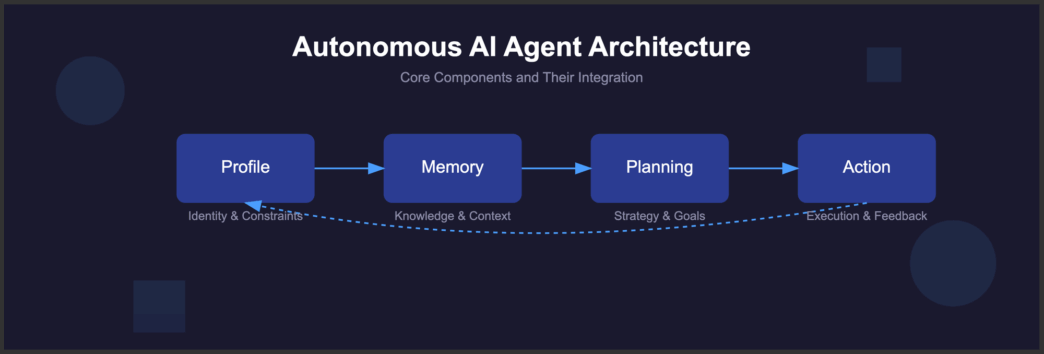
The rise of Agentic AI is set to redefine business operations, moving companies from manual, step-by-step tasks to intelligent systems that can reason, plan and act autonomously. As enterprises navigate increasingly complex workflows, Agentic AI promises to bring a new level of agility, efficiency and adaptive decision-making.
What is Agentic AI — and What Makes It Different
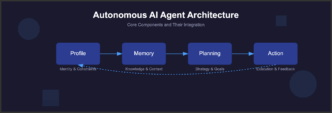
- Unlike traditional automation or even generative-AI assistants, Agentic AI doesn’t just respond to prompts. It acts: it sets goals, evaluates data, plans next steps, executes tasks — and adapts as things change. Think of it as a “digital co-worker” rather than a passive tool.
- These AI “agents” can operate independently or collaborate across teams and systems. They’re designed to manage multi-step processes, coordinate across departments, and deliver outcomes, not just outputs.
Why 2026 Is Poised to Be the Breakout Year
Recent industry analysis shows a clear shift: businesses are moving from experimenting with AI to embedding autonomous agents across workflows. This shift is driven by three major trends:
- A push for hyper-automation across end-to-end processes, not just isolated tasks.
- Rising demand for real-time decision-making and responsiveness in dynamic business environments (supply chain, finance, IT, customer service).
- Growing maturity in enterprise data and infrastructure — making it easier to integrate AI agents as part of core operations.
The Impact: Seven (Actually, Eight) Ways Agentic AI Will Transform Process Excellence
Here are the top ways Agentic AI is set to reshape how businesses operate: 
- Autonomous Decision-Making & Execution
Agents don’t just highlight what needs doing — they carry it out. From routine tasks like invoice processing or compliance checks to more complex operations like supply-chain adjustments, agents can handle entire workflows end-to-end. - Real-Time Adaptation & Proactivity
With continuous monitoring and feedback loops, agents react to changing conditions (demand spikes, delays, anomalies) and adjust workflows on the fly — helping businesses stay agile and responsive. - Cross-Functional Coordination and Workflow Orchestration
Multiple agents can work together or across departments — coordinating IT operations, HR, finance, customer service, logistics — enabling seamless collaboration without manual hand-offs. - Scalability and Efficiency at Enterprise Scale
As agents manage repetitive and complex tasks, human teams can focus on strategy and creativity. This boosts productivity, frees up resources, and allows organizations to scale operations without proportionally increasing headcount. - Better Accuracy, Consistency, and Risk Reduction
By automating decision-heavy processes (compliance, audit, risk monitoring, data entry), agents reduce human error, ensure consistency, and help enforce compliance — especially in regulated industries. - Faster Time-to-Value & Process Innovation
With agents handling groundwork, companies can accelerate project timelines, roll out new initiatives, and experiment with process improvements more rapidly than before. - Smarter Use of Data for Continuous Improvement
Agents don’t just execute tasks — they learn. With each action and feedback loop, the system gets smarter, refining workflows, optimizing decision paths, and improving outcomes over time. - Evolving Operating Models — From Tools to Digital Workforce
The most significant shift: organizations may start to think of AI not as tools, but as autonomous collaborators — transforming enterprise architecture, process design, and even workforce structure around “AI-enabled operations.”
What Businesses Should Do to Prepare
For companies aiming to adopt Agentic AI thoughtfully, the transition is about more than just technology — it’s about structure, governance, and readiness. Steps to consider:
- Build a strong data infrastructure and clean, reliable data pipelines — agents need good data to make good decisions.
- Start with focused, low-risk workflows (e.g. finance-back-office, IT-ops, compliance) to pilot value before scaling.
- Define clear governance and oversight to ensure accountability, transparency, and ethical behavior in autonomous workflows.
- Invest in human-AI collaboration culture, upskilling teams to work alongside agents and trust their output.
- Monitor and measure outcomes — operational efficiency, risk reduction, decision latency — to justify ROI and refine deployment.
The Bigger Picture: A New Era of Enterprise Intelligence
As Agentic AI moves from pilot projects to mainstream deployment, businesses could transition from reactive process management to proactive, intelligent operations. Workflows will be smarter, decisions faster, and enterprises more resilient — effectively redefining what “process excellence” means in the age of autonomous intelligence.
For companies willing to embrace the future, Agentic AI isn’t just another upgrade. It’s a strategic leap into a world where business processes aren’t just optimized — they evolve.